


Most all RVs will require the use of a liquid propane gas (LPG) regulator to supply a consistent and controlled vapor pressure to the propane appliances. This unit will be mounted near the type of container used on your RV and must be protected by a cover if exposed to the elements.
The RV regulator is a two-stage unit. The first stage will reduce the incoming and ever-changing pressure from the DOT or ASME tank to about 10 to 15 pounds per square inch and the second stage will further reduce the pressure to about 0.5 pounds per square inch or 11 inches of water column, which is a unit of measurement used for small or minute movements of either pressure or vacuum.
An RV LPG regulator works like this: the LPG fuel vapour leaves the supply container and travels through the regulator pigtail, which contains two safety features—the excessive flow and thermal protection devices. As the fuel enters the main body of the regulator there are diaphragms which monitor the pressure of the gas flow passing through a small needle. If the needle pushes excessively hard on the diaphragm, it releases the spring which closes the valve and stops the gas flow. If the gas pressure is within operating levels, the valve will remain open. This is a very basic description of the function of the regulator.
When problems arise
Never attempt to adjust the gas regulator yourself. Have a certified RV technician do the required leak-down and pressure tests.
As mentioned above, the diaphragm vent must be protected by a cover to allow the internal diaphragm to breathe properly or move up and down with pressure changes. If this vent becomes blocked with debris like dirt or insects, the regulator may fail to function properly or efficiently. You should check the mesh screen to ensure it is clean. The regulator vent must face downward within 45 degrees.
Another problem that will affect regulator operation is the presence of water inside the cylinder or tank that can enter the regulator and freeze up the internal components in certain weather conditions. The remedy for this is to have methyl alcohol added to the container before your next refill.
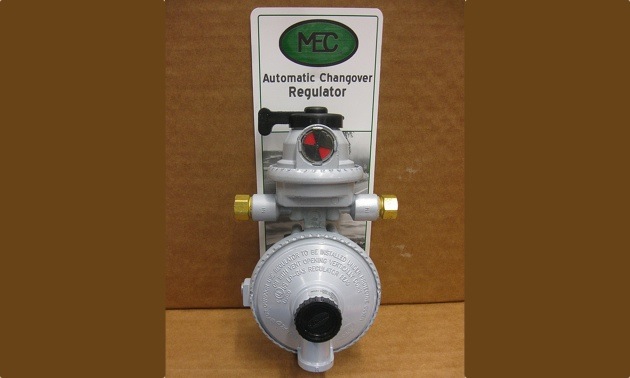
In recent years, many RV manufacturers have been installing automatic changeover regulators on the units. This type of regulator will have an easy-to-read indicator and automatically change from the depleted bottle to the full bottle. The switch at the first stage regulator will indicate the supply tank being presently used and an additional indicator will change colour, usually from green to red, if the tank is depleted. The switch will then be changed to the reserve tank and the previous supply tank can be removed to be refilled without interrupting the propane supply. Read your RV manual or visit your local RV service center to ensure this procedure is done properly and safely.
If you feel confident about changing a regulator or pigtail line, always use the proper yellow Teflon gas tape or pipe thread compound.
The RV LP regulator’s service life can be compromised by dirt, vibration, road salts and other elements. Never attempt to repair a faulty regulator.
Although an RV regulator is built for durability and capable of handling tank pressures that can exceed 200 pounds per square inch, it should be checked yearly to ensure proper function and operating characteristics. Many RV dealerships offer spring shakedown LPG inspections to make sure you don’t start off the RV season with a BANG.