
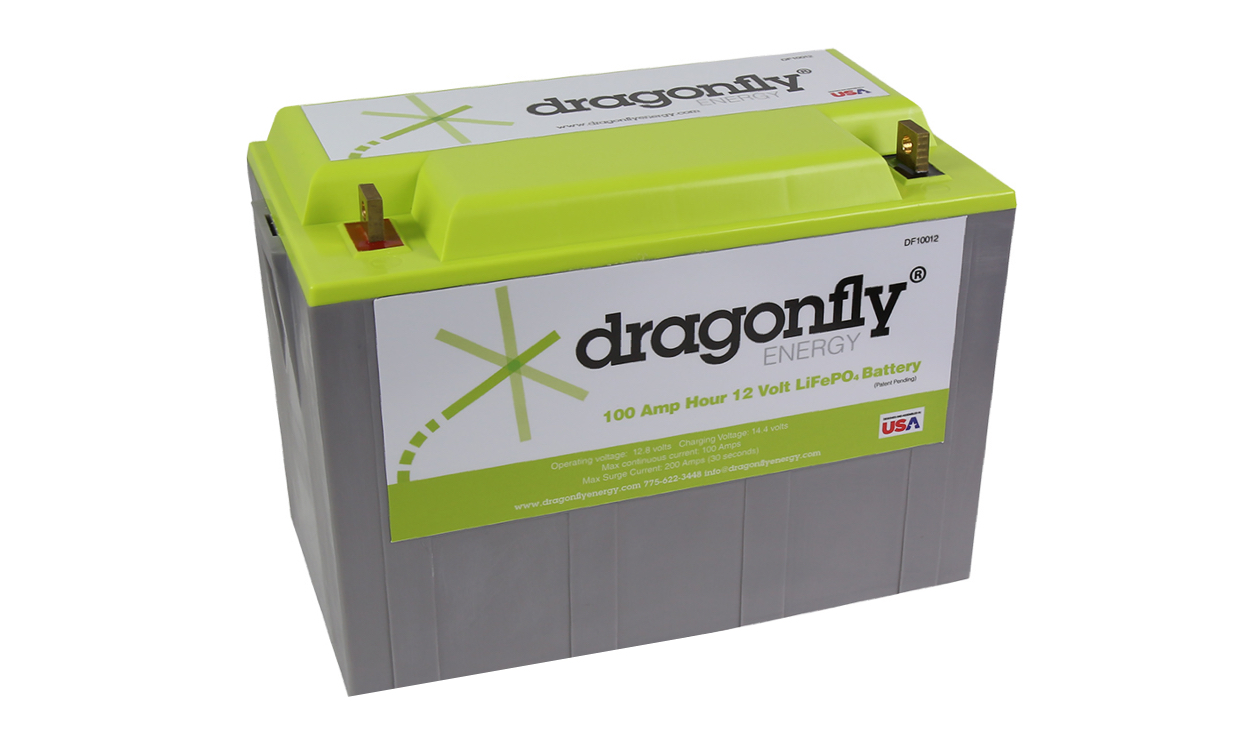


Many RV owners are interested in RV lithium-ion batteries. This technology is being integrated into the product by some manufacturers to monitor and provide information like battery temperature, voltage, current draw, faults, state of charge, etc., all in real time. The technology can also alert the user of pending damage.
The lithium battery has been around for a while and is used to power laptops, cordless tools and the like. Their use has been introduced to the RV market and in combination with solar off-grid home systems.
In the early years of development lithium cobalt dioxide was the formula used in lithium batteries and this chemistry was prone to what is known as a thermal runaway if the battery was accidentally overcharged. They had the potential to catch fire and burn extremely hot and fast without being easily extinguished. In about 1996 a new formula was devised, primarily using phosphate, which made this type of battery much safer for use.
The advantages of lithium batteries
Most RV applications will have a BMS (Battery Management System) working with the system to protect the batteries from damage if the battery is not equipped with integrated components. The BMS will provide high/low battery voltage cut-outs, high/low temperature cut-outs and automatic cell balancing, much the same as the integrated Bluetooth option.
Another safety aspect of lithium batteries is that they will not gas off like a lead acid battery, which allows for more installation areas without dedicated vented compartments.
Some of the advantages of lithium batteries are the extended lifespan with cycling capabilities in the 2,500 to 5,000 range compared to 500 to 1,000 with lead acid.
They can deliver high amp loads and recharge at higher amps with no need for absorption or equalization modes, which allows the battery to charge up to five times faster than other battery types. The lithium battery has an extreme tolerance to harsh environments like severe hot and cold temperatures, but it must be noted that lithium should not be recharged at temperatures below freezing. These batteries are much lighter than lead-acid for ease of handling and reduced weight overall especially with regards to tongue weights.
Lastly, having lithium batteries with a solar installation is very beneficial in that they will keep accepting current until fully charged, but will provide usable power at 50 per cent to 80 per cent state of charge on those overcast days.
What to consider before installing lithium batteries in your RV
There a few things to consider before purchasing lithium batteries for your RV. Firstly, as with many upgrade components, the cost is a factor. This premium battery technology is expensive with pricing up to three or four times higher than lead acid, but the longer lifespan and much-improved efficiency may balance the purchase out. Also, be aware that lithium batteries will need the proper charge parameters met by the BMS, solar charge controller and converter.
Most factory-installed RV converters are not compatible and will need an upgraded unit to work with lithium batteries.