
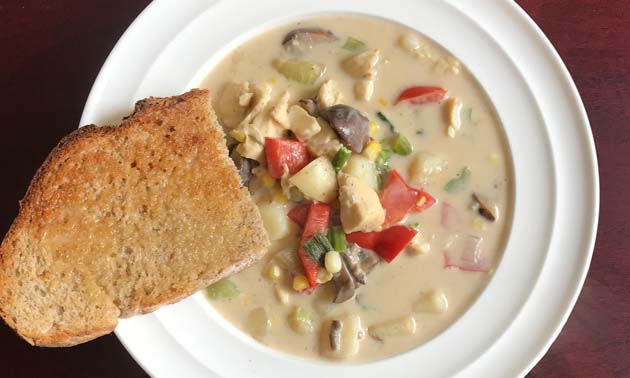

Northern pike are bony and delicious: remove the bones, keep the delicious. The complication with pike is the set of Y-shaped bones above the lateral line. Northern pike are commonly dismissed as reliable table fare because of the bones. But once you figure out how to effectively remove the Y-bones, early season Northern pike from cool water is delicious.
Tools
Filet knife
Cutting board
Large pot to cook corn cobs
Large Dutch oven to cook chowder
Wooden spoon
Measuring cups, spoons or scale (These are exact measurements, but close enough will still make a delicious result.)
Ingredients
600 grams (1 ½ pounds) fresh boneless pike, cut in chunks
60 grams (¾ cup) green onions, chopped
250 grams (3 cups) sliced brown mushrooms
200 grams (1 ½ cups) diced red peppers, stem and seeds removed
400 grams (2 ½ cups) potatoes, peeled and diced
100 grams (1 cup) celery, chopped
2 corn cobs
750 ml (3 cups) 1% milk
125 ml (½ cup) whipping cream
30 grams (3 tablespoons) all-purpose flour
30 grams (2 tablespoons) butter
30 ml (2 tablespoons) olive oil
Black pepper and salt to taste
1 to 3 teaspoons of concentrated chicken stock
Method
1. Put pot of water on to boil for the corn.
2. Shuck the corn cobs and boil three minutes. Remove immediately from heat, drain and chill cobs in cold running water.
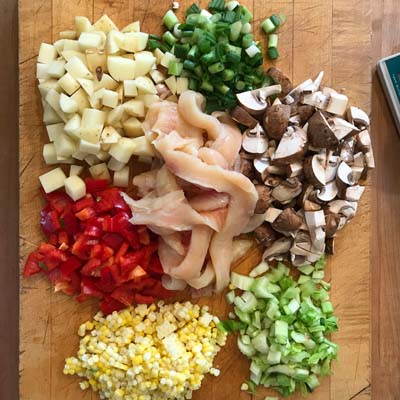
3. Dice mushrooms, peppers, celery, onions and potatoes and place in separate piles to be added to the pot in succession.
4. Cut corn kernels from the cob.
5. Preheat the Dutch oven. Add butter and oil. When a drop of water sizzles, add potatoes and stir well, cover, stir again in five minutes.
6. Add mushrooms and increase the heat to high.
7. Stir again at five minutes.
8. Reduce heat to medium and cook five more minutes. Add celery and stir well.
9. Add pike chunks, stir well and add red peppers, green onions. Cover and cook another three minutes on high.
10. Add the corn kernels and stir.
11. Sprinkle flour lightly over the ingredients while stirring.
12. Add milk and cream, stirring until everything is well combined.
13. Sprinkle with pepper and add a teaspoon of concentrated chicken stock. Stir well and taste. If the pot needs more concentrate, add up to three teaspoons of stock.
14. Simmer 10 more minutes and add salt to satisfy your guests’ taste buds.
15. Serve big bowls of chowder with fresh sourdough, biscuits or cornbread.
Any fresh fish, no matter if you caught it or bought it, can easily be substituted. You can even use cooked fish or leftover fried fish from a previous meal––just add that cooked fish at the end of the cooking.
A steaming bowl of fresh chowder is particularly gratifying when the weather is miserable, and a boatload of your crew is hunkered under the awning while the rain pours down. Chowder takes the edge off the disappointment of not being on the water . . . and reminds you of one of the reasons some of us fish.