
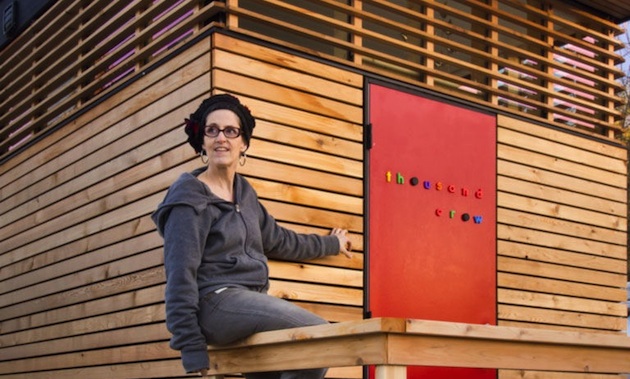
What do you get when you cross an RV with a laneway house? Well, what Isabella Mori got was an affordable wood-frame RV, custom built on a metal platform on wheels.
Thousand Crows, so-named after a local phenomenon, is no ordinary RV, nor is Mori a person you might expect to join the full-time RV world.
After renting for a while as she saved the dollars she needed to have a "tiny house" built to her specifications, she arrived in the Capilano River RV Park last fall to avoid Vancouver's sky-high land values and yet stay close to her job in social services.
After exploring the growing number of options in B.C.'s sustainable-homes market—including one on Hornby Island—Mori decided to work with John McFarlane of Western Camera Buildings to design her new home.
Specifications
The cedar-clad unit measures 24 by 8.5 feet and the interior ceiling height is 9 feet, making for a space that is tiny by any comparison for a full-timer.
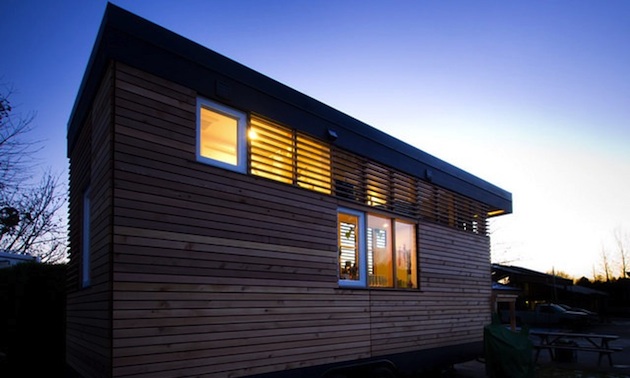
The roof is metal and membrane, for a Gross Vehicle Weight (GVW) of less than 10,000 pounds, which means Mori's RV is road-legal and insurable for towing purposes.
Insulation rating is R-20 and hook-up to utilities matches that of most RVs: wiring accommodates 30 or 50 amp connections, potable water is by hose, grey and black water drains into the campground sewer.
Features
As with any RV, the secret to living comfortably in a small space is the built-ins, including cabinets, small appliances and storage space. Mori decided on a smaller fridge than is common with traditional RVs, and for hot water she chose something I've always wanted: a tankless, instant-on water heater. The double bed can be tucked away under the living room floor when not being used.
“Because of its good insulation, compact size and high degree of airtightness, it will be easy to heat and cool,” said McFarlane about the RV.
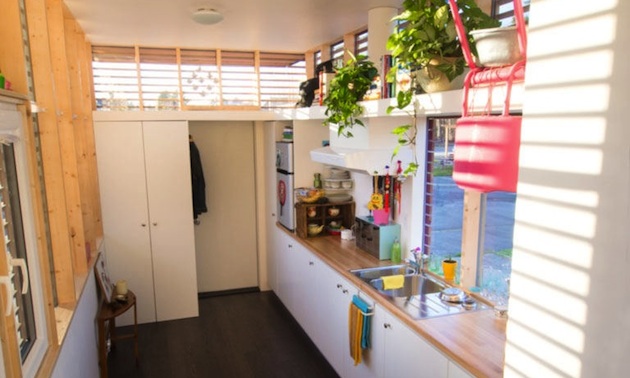
Camera buildings maximize natural light and cross-ventilation and use low-VOC (Volatile Organic Compound) materials and adhesives that McFarlane said "ensure the health of both occupants and their interior environment."
Regulations and bylaws
It is essential to check all applicable regulations and building permits that might be required before you order a tiny home. Dimensions, towable weight, utility hook-ups and sewage disposal must meet the requirements of your intended location, and of all jurisdictions you may encounter along the way.
The tiny house lifestyle
As with traditional RVs, a potential buyer should think long and hard about his or her lifestyle before deciding on the size, design and type of unit to buy. Mori's new home could have been built to sit on a residential-style concrete foundation instead of a towable frame, or have come with slides for added width. With extra length, the bathroom could have been slightly larger, or the bedroom designed as another full room on the mezzanine. Significant design changes, of course, add to the cost.
Depending on intended function and features, prices for Western Camera's tiny buildings begin at $25,000 for a basic single room studio. Mori's Thousand Crows cost less than $40,000.
Mori and Camera Buildings have brought RV design into the mainstream of affordable living. All that's needed now is for governments and RV parks to take the same leap.
Want to buy a tiny house?
- Do your homework—more than once. A tiny-house RV only takes eight to 14 weeks to build, so you don't have to rush it.
- Read everything you can find on prefabricated tiny houses and the companies that build them. Try to speak to current owners to see if they're happy with their experience. Ask if there's anything they wish they'd done differently.
- Check with ICBC and your local branch of the Department of Motor Vehicles and ask them to put their approvals in writing.
- Check with home insurance companies to see whether they will offer coverage for the unit you're planning.
- Talk to owners or managers of the RV parks you're interested in and to the staff of the local municipality or region. Describe in detail the RV you're planning and, again, get their approval in writing before you give a go-ahead to the builder.