
The history of Golden does not have much to do with its namesake. The town's name has less to do with the valuable mineral and more to do with heated rivalries between settlers.
Golden Museum and Archive's manager Colleen Palumbo has documented the town's 135-year legacy. Back in the late 1800s, the community got its start with the development of the Canadian Pacific Railway.
"We had our gold rush early in our history, but that's not how we got our name at all," Palumbo said. "Near what is today Lake Louise, there was a sawmill there that CPR (Canadian Pacific Railway) used. They had little camps that they set up along the railway that cut ties and those ties would go onto flat cars that went to the track wherever it happened to be that day."
Palumbo said a man named Mike Carland played a role in how the town got its name.
"He ran one of the mills that was at the camps," Palumbo said. "He decided he was going to stay where he was, so he changed the name of his camp from Carland's Camp to Silver City."
Word of the change spread to settlers near the Columbia River, who apparently were not fans of Mike Carland or his settlement.
"When word reached Golden, they (the settlers) said 'Oh no, we won't be outdone by the likes of Mike Carland. We're going to change the name of our camp and it will now be Golden City.' It had everything to do with ego and very little to do with the gold they could get from the ground," Palumbo said.
While no one has lived in Silver City since 1937, the community of Golden went on to become the town it is today, nestled in the confluence of the Kicking Horse and Columbia Rivers with many opportunities to become one with nature in the valleys and the mountains. Palumbo felt it was this connection with the environment that the community embraced from its heritage.
"The reasons that people came is that they were looking for that last great adventure," Palumbo said. "Most of the rest of the country had been settled, but there was this little place in the mountains that offered people an opportunity for that last little bit of adventure. We still have that today."
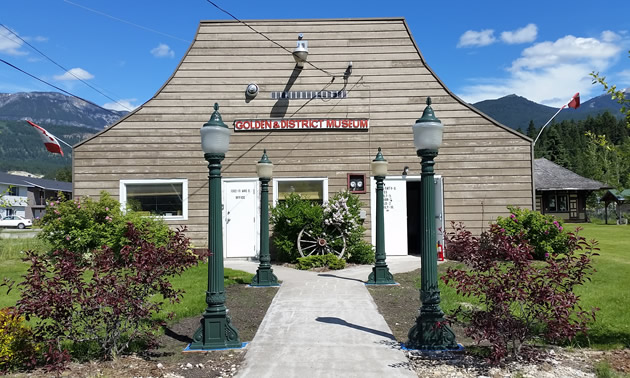
To learn everything about the community's roots, Palumbo recommends a visit to the Golden and District Museum, where you can find out about their multicultural heritage.
"We not only are celebrating the Metis in the community, but Golden, B.C. had the first Sikh Temple in North America," Palumbo said. "We have a great exhibit on that at our museum and we are continuing to expand and provide people with new opportunities to learn about interesting things from the past."
The current Sikh temple is administered by the Golden Sikh Cultural Society. While it is a newer facility, it has strong ties to Sikh settlers in the past.
"We had that early settlement of Sikh men that came to Golden to work with the Columbia River Lumber Company," Palumbo said. "They were a really new settlement and the men were looking for work and the kind of work they were used to was working in a sawmill."
Palumbo hopes to celebrate Golden's 135th birthday as part of Canada's 150th anniversary.
Much of the town's history is also reflected in its nature activities. To become closer to nature, tourists can enjoy the many walking and hiking trails or visit the Northern Lights Wildlife Wolf Centre. For the adventurous, there are numerous white water rafting companies and skiing available at Kicking Horse Resort. There is even modern activities like paragliding or hang gliding on Mount Seven.
"If you have the adventuring spirit, then you should definitely come to Golden, B.C.," Palumbo said.
Getting to know Captain Francis Patrick Armstrong
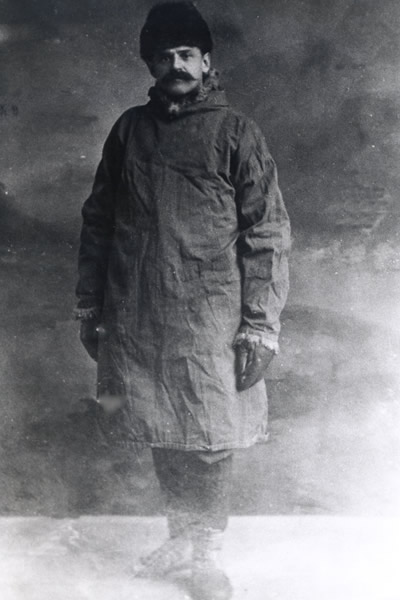
Captain Francis Patrick Armstrong (circa 1859-1923) came to the Columbia Valley in 1882, very early in Golden's history, as a businessman.
Armstrong was in Canal Flats growing potatoes, when he learned the Canadian Pacific Railway was coming through Golden. Wanting business with CPR workers, he built the first riverboat as a trade vessel beyond the Columbia River.
Armstrong continued to build larger river boats, captaining them from 1886 until the last riverboat ran on the Columbia River in 1920. Armstrong was heavily involved in Golden's history, supporting its church, helping build the first hospital in the community and helping its residents with various projects until he passed away.
- Information provided by the Golden Museum and Archives.